
 Creative

Building balance in a burnout industry
It’s no secret: burnout runs rampant in our industry. But building work-life balance isn’t a mystery—it's a necessity. Here's how the Cohera team does it.


Checking the last item off of your to-do list at 2 am. Being the first and the last person at a week-long program. Going home hours after the last piece of confetti has been swept and the final flute of champagne has been drained. This isn’t overtime; it’s the status quo. In an industry where doing the most is the least you can do, burnout is a familiar foe. In fact, PCMA found that 88% of event planners say they feel exhausted, 78% have negative feelings about their job, and nearly half say they’re less efficient because of it.
The hard truth that makes us self-proclaimed perfectionists squirm? Perfect work-life balance isn’t achievable. If you came here looking for how to balance work and life in the event industry, the answer may be less about perfect balance and more about building a rhythm you can actually sustain. The silver lining: by setting better boundaries and developing healthy ways to cope with stress, you can stop surviving and start thriving. It’s not easy, but it’s more than worth it. Here’s what I’ve learned from my own experience and from the people I’m lucky enough to work alongside.
A culture of support is key.

Thriving at work starts long before a deadline or a difficult week. It starts with the team around you. At Cohera, I’ve seen how much of a difference it makes when mentorship is strong and leadership takes mental health seriously. That means supporting employees when they need to take a mental health day and maintaining an open-door philosophy that makes asking for help a strength, not an exception.
Boundaries are part of how we operate. Not as walls between colleagues, but as agreements that build trust and reduce friction. When everyone on a team understands and respects each other’s limits, the work gets better, and getting it done is a lot more fun.
I asked our team to share what actually helps them take things in stride and build something that feels more sustainable. These aren’t workarounds; they’re the result of a workplace that encourages people to take care of themselves. A team that shows up whole shows up better.
Balance? What balance?
Here’s the hot take it hurts to accept: you can’t balance it all. Nobody does. And the sooner we let go of that particular fantasy, the better we sleep at night (doesn’t that sound like a dream?).
Our Director of Sales in Texas agrees: “It is normal to feel like you are failing and to learn to let go of some things that are further down on the ‘matter’ list. The house isn’t perfect, but work is thriving, and the kids are having a great summer. Win! The kids are not doing ‘perfect’ activities every moment of summer, and that is okay. A ’90s summer is on trend. Perfect is not perfect, and no one is actually balancing it all.”
The shift that actually moves the needle isn’t about doing less. It’s about being intentional. Our General Manager in Texas put it simply: “Presence over pace. I can’t slow the schedule, but I can be intentional about where my energy goes. When I’m at work, I’m leading; when I’m home, I’m present.”
And when the to-do list starts bleeding into your evening? Our Event Manager in San Diego has a reminder worth bookmarking: “It’s okay to put your work away, take the evening for yourself, and get back to it in the morning.”
Get out of your head and into your calendar

When everything feels urgent, structure protects our sanity. We event professionals are, by nature, some of the most organized people on the planet. The trick is turning those instincts inward.
Our Senior Design and Development Manager in San Diego lives for her list. “Sometimes when it’s all in your head, it can feel overwhelming and possibly bigger than what it actually is. I like to list it all out, color code it, look at my calendar, and create a plan of action. What can I get done first? Where can I get help? When are the due dates? It really helps me digest what is on my plate, and nine out of ten times, it’s actually not as bad as I think it is. As my grandfather always says, ‘POE: Process of Elimination. One thing at a time.”
Our GM in Texas takes it a step further with what she calls structured flexibility: calendar blocking, shared family calendars, and delegated workstreams, while leaving room for things to shift. “Not everything is urgent, even if it feels like it,” she says. “I triage constantly and empower my team to do the same. I’ve learned I can’t carry everything. Clear expectations and trust in my team keep things moving without bottlenecks.”
It’s worth noting that the stakes are real. Research from events consultancy ClinkClink found that 80% of event managers sleep poorly the week before an event, and 35% get fewer than four hours of sleep the night before going on-site. Structure isn’t a nice-to-have. For this industry, it’s a survival skill. A good event planning timeline is one of the simplest places to start honing it. When you need a fast reset, this 3-minute reset is worth keeping in your back pocket.
Take care of yourself
In an industry that runs on adrenaline and unbelievable achievements, it’s easy to forget we’re human. But the team members who show up most consistently aren’t the ones pushing hardest. They’re the ones who have made taking care of themselves non-negotiable.
For our Senior Account Executive in Washington, D.C., that means exercise and sleep, full stop. “Regular walks and strength training help keep me grounded, reduce stress, and improve my focus. When I take care of my physical health, I’m also taking care of my mental health, and I’m better equipped to handle challenges and high-pressure situations. If I need to step away for an hour to work out, I do it, and I return to work feeling more energized and productive. Happy brain, happy life.” She also makes time for the smaller moments: collecting her dog’s rent in kisses, booking the occasional spa day, and yes, therapy. “Mental health is so important,” she says, and I couldn’t agree more.
Our Event Manager in San Diego is in the same camp. “I do Pilates, hydrate, focus on good foods and nutrition, and make time for me more now than ever. I am making myself a priority for the first time in my career. It’s a struggle but extremely rewarding.”
Not every reset has to be a workout or a wellness routine. Our Vice President in Atlanta finds her recharge in micro-breaks, wandering a bookstore, making playlists, retooling her Pinterest board. “Those breaks help me feel creatively happy and not just productive,” she says. For more inspiration on weaving wellness into your workday, we’ve got you covered. Hungry for more? These healthy snacks for event profs make on-site fueling a little easier.
You don’t have to carry it alone

The event industry attracts a certain type: capable, resourceful, and deeply reluctant to ask for help. But the team members who sustain long careers in this business aren’t the ones who go it alone; they build and rely on a network that catches them when things tip.
For our Director of Design in Colorado and New York, that network starts at home. “There is absolutely no way I could show up the way that I do at work if my partner didn’t pick up a lot of the housework and the unpaid labor we are always talking about. They are my rock.” At work, she’s equally clear-eyed about what makes the difference—her local teams and General Manager, who step in well outside their job descriptions when the load gets heavy. “I really do consider myself so lucky to work with people who are willing to jump in, because I know it’s so rare.”
That willingness to ask is its own skill. Our Senior Director of Business Operations and Training puts it plainly: “Knowing when I need to ask for help, tap out, or ask for an extended deadline has made the biggest difference.”
And it goes both ways. Our General Manager in Texas draws a sharp distinction between support that helps and support that shares the load: “At home, that means a partner or support system that’s truly shared—not ‘helping me,’ but co-owning the household. At work, it means a strong leadership team I can lean on and delegate to, and people who anticipate needs and take initiative. That’s gold in a busy season.”
Working parents, we see you

If work-life balance is complicated for everyone in this industry, it becomes a contact sport when you’re a working parent. I say that as someone who lives it. The logistics alone can make even the most seasoned event pro sweat: school calendars, childcare, back-to-school chaos, and the milestones that do not move for anyone’s program schedule.
In full transparency, it is a constant struggle. If I am too focused on work, I feel like I am not being present for my daughter. Yet, if I am deep in mom mode, I know things are still pending for work. There is always something asking for my attention, and learning how to live in that tension has been one of the hardest and most important parts of this season of my life.
What has helped me most is not a perfect system. It’s a village. Creating my village has helped me tremendously when I can’t be there, and I try to be part of other people’s villages too. We all need to help each other. Finding your tribe truly makes all the difference.
Google Calendar is the backbone of it all for me. I am a very visual person, and I live by my calendar. If it is not on there, I can’t plan for it and will most likely forget about it. School calendars set the rhythm: teacher planning days, testing days, half days, fall break, winter break, spring break. We need childcare and backup plans to accommodate those schedules, which is a reality any working parent who has ever scrambled for help the week before a major program will understand immediately.
Parenting has also quietly sharpened how I work. Plans can change in an instant, so I’ve learned how to stay flexible while keeping my focus on what matters most. It has helped me become a better communicator, a better listener, and more aware of everyone’s different needs and perspectives. Being a mom has reinforced the importance of showing up, following through on commitments, and staying patient when challenges come up. Those same skills carry over to how I work with my team and clients.
My definition of balance has evolved too. As a new working mom, I thought work-life balance meant giving equal time and energy to everything. Over time, I’ve realized that’s not realistic or sustainable. What feels more doable now is being deliberate with my time, setting boundaries when I need to, and focusing on being fully present wherever I am. I’ve learned that I can do it all, just not all at once.
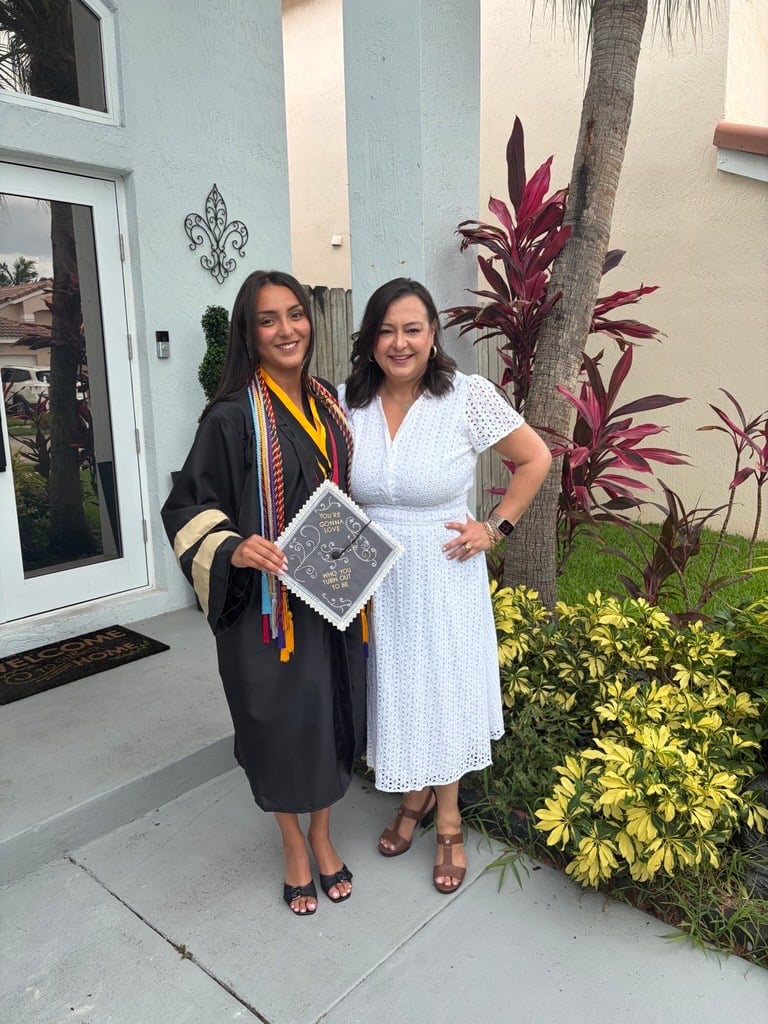
I’m not alone in that. Our Director of Sales in Northern California, a working parent of three very active kids, is away from home up to three nights at a time during busy seasons. “Balance doesn’t mean everything gets equal attention at all times. Some weeks are heavier than others, and that’s okay. For me, success looks like staying prepared, being transparent, and showing up fully wherever I am in that moment.”
Our General Manager in Chicago and Nashville anchors herself in small daily rituals with her kids, no matter how full the schedule gets. “No matter how full life gets, I make sure we have a moment to connect each day. Sometimes it’s dinner together, a walk to the park, or even a short drive where we catch up on their day. Those small moments have a way of putting everything else back into perspective.”
The advice I would give my younger self, and any planner trying to build a family alongside a demanding career, comes straight from my mom: “Es ok. Give yourself grace. Nothing is perfect, and you don’t have to be either.”
This may be the end, but it’s just the beginning
Perfect work-life balance was never the goal. Building something sustainable (a system, a community, a set of boundaries that actually hold) is the goal. And if there’s one thing our team has proven, it’s that it’s possible, even in one of the most demanding industries on the planet.
The strategies in this article aren’t theoretical. They come from people I work beside every day, people who are in it with you. They’re also logging the late nights, navigating the packed calendars, and still showing up whole for the people who count on them most. That’s not luck. That’s intention, practiced daily.
And if you’re looking for one more tool to help buy back a little time, AI is changing the way event planners work. Trust us, it’s worth exploring.
Start small. Pick one boundary, one ritual, one person to lean on. Build from there. And if you think Cohera could be part of your future, we’d love to get to know you!
Browse our blog

Meet Trina Roffino
Read more
New CEO. New chapter. Lots to be excited about.
What to do in Nashville: A group guide for planners
Read more
Nashville has no shortage of ways to turn a group trip into a good time. Discover the hotels, venues, restaurants, and experiences worth adding to your Nashville agenda.
Breaking the general session mold
Read more
General session design doesn't have to feel predictable. See how experiential touches turn the main stage into a moment guests remember.
Ready for your one-of-a-kind experience?
Your inbox is starving. Feed it something good.
Sign up for our newsletter