Not every surface needs a logo: how to build a branded event people actually feel
Event branding works best when the logo supports the story, not steals the whole show.

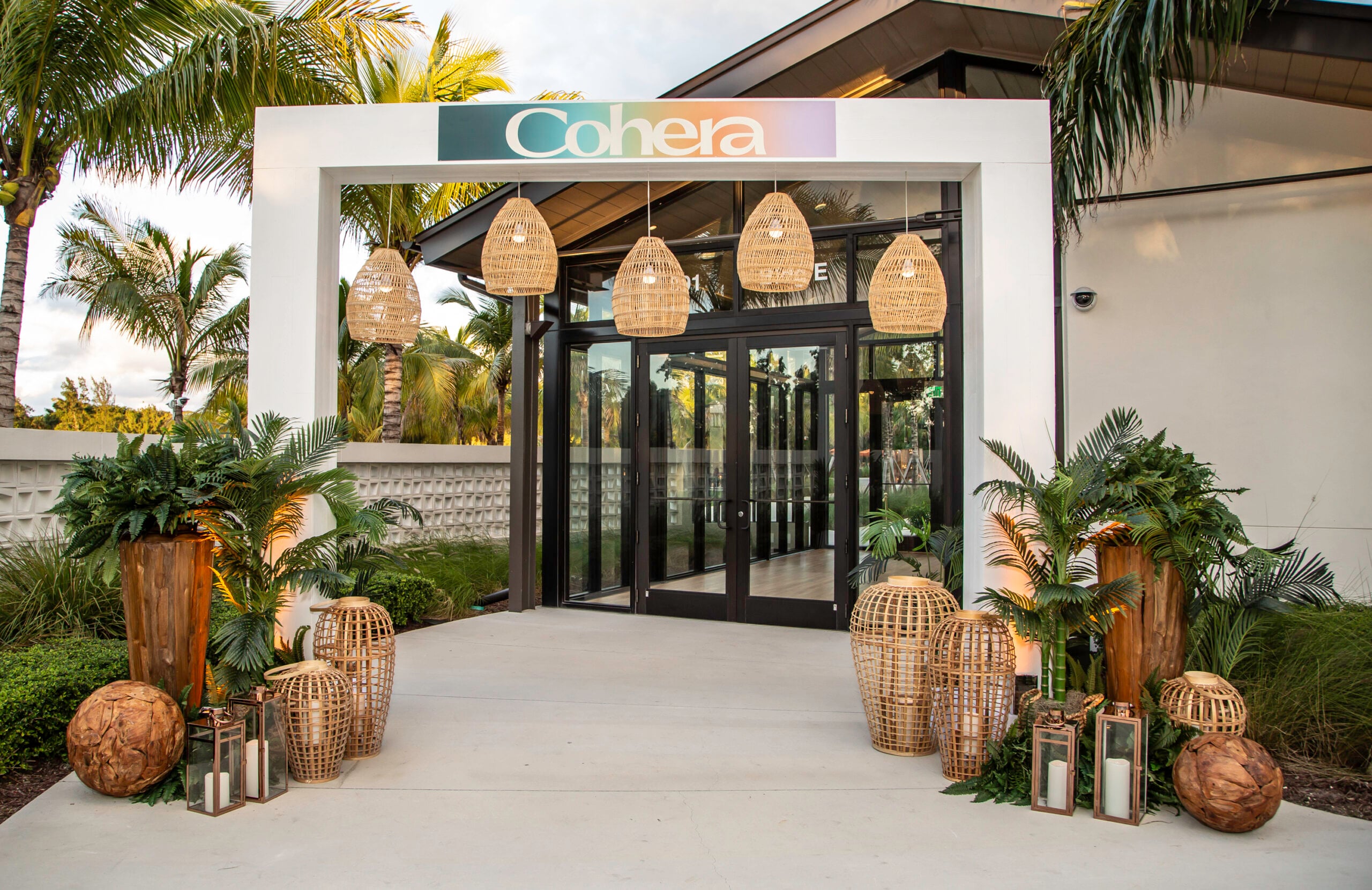
There’s a particular kind of panic that can hit in the middle of event planning. It usually sounds like this: “Can we make the brand bigger?”
Sometimes, yes. Sometimes, absolutely not.
When clients ask for a branded experience, the first instinct is often to go big and obvious: oversized logos, step-and-repeats, installations that say, loudly and repeatedly, “In case you forgot whose event this is, here you go.” It feels safe, it feels measurable, and it photographs well.
And sometimes, that is exactly the right move.
But the branded experiences that tend to stick with people a little longer usually do something else. They tell the story without yelling it. The brand shows up in the mood of the room, the materials guests touch, the colors catching the light, the way an activation unfolds, even the feeling people leave with. Less “look at our logo.” More “that felt exactly like us.”
That’s the sweet spot.
Because a brand is not just a mark slapped onto a bar front and called a day. It’s personality, point of view, and emotional memory. If you’re building an event around corporate identity, the goal is not to decorate the room with branding. The goal is to make the brand make sense in the room.
And yes, there’s a difference.
Start with the truth, not the logo
If you’re designing a branded activation for the first time, here’s the first question worth asking: what actually makes this brand this brand?
Not just the color palette. Not the fonts. Not the tagline that got approved after fourteen rounds of edits.
The real stuff. Who are the people behind it? How does the company make customers feel? What does it stand for when nobody’s looking at the style guide?
The strongest branded events have a clear center of gravity. Maybe the brand is playful and social. Maybe it’s thoughtful and precise. Maybe it’s all about transformation, collaboration, momentum, and trust. Once that truth is clear, design decisions get easier. You stop adding branding for branding’s sake and start choosing moments that actually support the story.
That’s when the event stops feeling like a trade show booth that wandered into cocktail hour.
Big brand moment or subtle story?
There is nothing wrong with a bold brand moment. Sometimes a client needs visibility throughout the event because the goal is awareness, reinforcement, or broad recognition. In that case, visible logos across key touchpoints can make sense.

But not every audience wants to be hit over the head with a visual sales pitch while they’re trying to enjoy dinner.
That’s where subtle storytelling earns its paycheck.
A more layered approach lets the brand show up through texture, tone, programming, sound, lighting, and atmosphere. Guests may not clock every decision consciously, but they feel the cohesion. And that feeling matters, a lot.
The right approach depends on the audience and the goal. If the event is about unveiling something new, holding the brand reveal until the end can land beautifully. There’s tension, there’s payoff, and there’s a little drama, which, frankly, events can always use when it’s intentional.
If the goal is familiarity and repetition, keep the brand present throughout. Just do it with restraint. You want reinforcement, not visual wallpaper.
The Photo Mosaic Booth gets it right
One activation we’re seeing more and more for a reason is the Photo Mosaic Booth.
From a branding standpoint, it works because it turns individual participation into the final image. Guests take part, then watch those contributions build into a larger branded reveal, often the company logo. That story is simple, but it hits. The logo exists because the people do. The company is not the mark alone. It’s the collective.
That lands a lot harder than dropping a logo on every napkin and hoping for the best.
It also gives guests something traditional logo placement rarely does: ownership. They don’t just look at the brand. They become part of it.
And that is the kind of thing people remember.
Use color with restraint
Color is one of the fastest ways to cue brand recognition. It’s also one of the fastest ways to make a room feel overworked if you get too enthusiastic.
The fix is simple. Use color as an accent and atmosphere tool, not a full-volume attack.
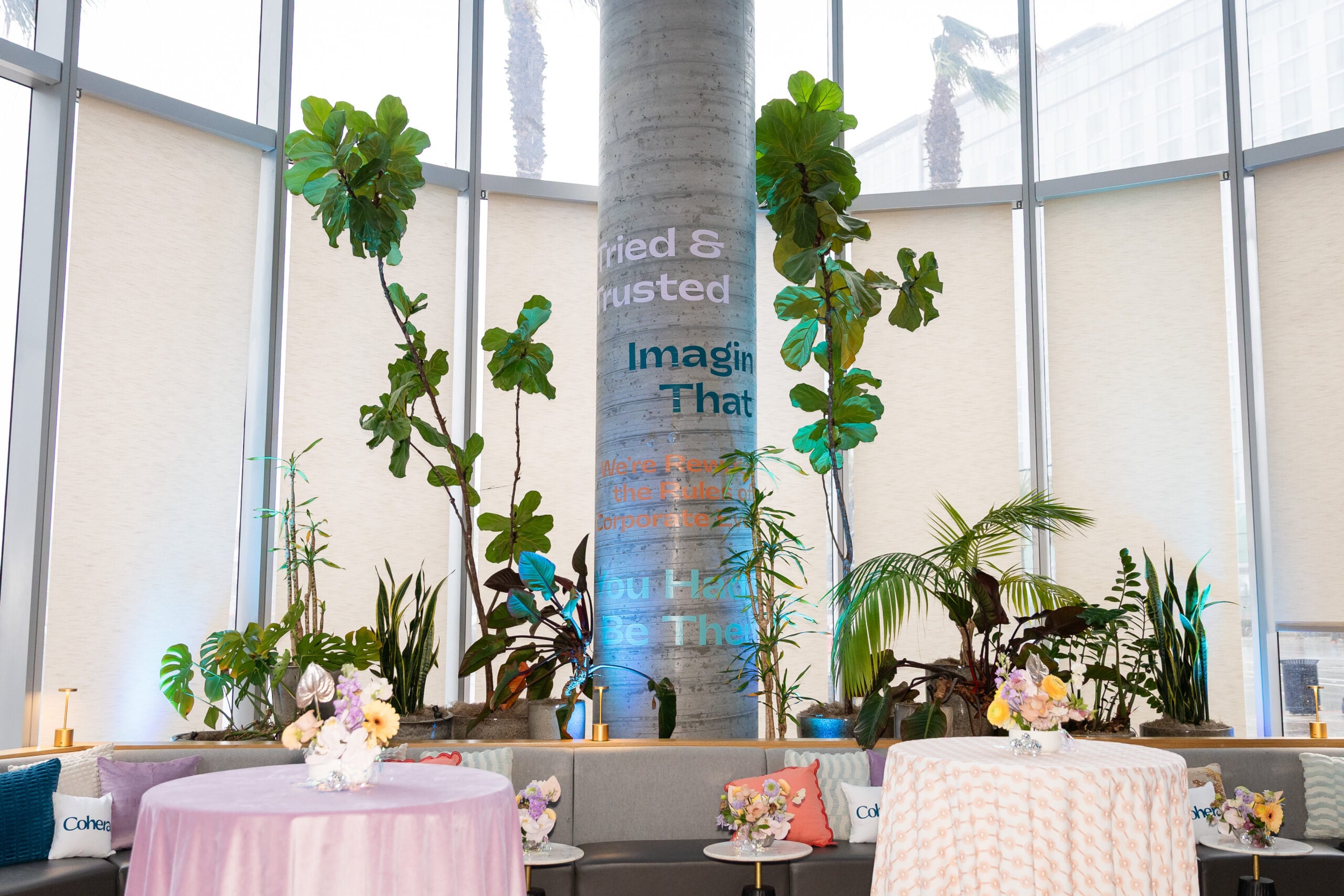
Try tones instead of exact matches across every surface. Use lighting strategically instead of turning the whole room into a branded highlighter. Balance stronger hues with natural materials, softer neutrals, or contrasting textures that let the eye rest.
This matters because branded environments still need to feel designed. Not flooded.
If every chair, floral moment, stage element, and cocktail garnish is screaming the same corporate blue, the result is not “impact.” It is “someone lost a bet with the Pantone book.”
Too much brand is too much
The most common issue we see is logo saturation.
When everything shouts, nothing stands out. If the logo is on every wall, every menu, every screen, every pillow, every glass, and possibly the moon, guests stop seeing it. The brand loses power through repetition instead of gaining it.
Another mistake is treating branding like decoration instead of narrative. A logo is not a design strategy. It is one tool inside a much bigger system.
A better question is this: where will branding feel natural, useful, and part of the guest journey?
That answer usually leads to smarter placement.
Make signage pull its weight
The most seamless branding happens when logos live inside functional design elements guests already interact with.
Think: bar fronts, stage fascia, charging stations, step transitions, interactive installations, and directional signage that actually belongs in the environment instead of looking like it was rushed to print the night before load-in.
This is where materials matter, too. If the event design uses warm woods, brushed metal, soft acrylics, layered textiles, or dimensional finishes, bring the logo into those same textures. Let it live in the same visual language as the rest of the room.
That’s how branding feels integrated instead of dropped in at the last minute by someone holding a thumb drive and a dream.
Less branding, better branding
A well-designed branded experience should feel intentional, not anxious.
Guests should understand who the company is before they even read the mark. They should sense the personality in the environment. They should connect the design choices to the bigger message. And yes, the logo should still have its moment. It just doesn’t need to have all of them.
The smartest branded events know when to be loud and when to hold back. They know that atmosphere can do as much work as signage. They know that storytelling tends to outlast spectacle.
Most of all, they remember that people are not moved by logos alone.
They’re moved by what those logos mean.
Browse our blog
Stop wandering. Start working IMEX.
Read more
IMEX America is big. Your time is precious. Make every meeting count with tips for smarter planning, meaningful connections, and a little room for the unexpected.
Look again: Finding inspiration in the city you know
Read more
Discover how exploring your own city with fresh eyes can spark creativity, deepen destination knowledge, and inspire better events.
Design matters. And we're here for it.
Read more
Good design isn't about how a room looks. It's about how people feel. IMEX and Cohera break down what experiential event design actually does.
Ready for your one-of-a-kind experience?
Your inbox is starving. Feed it something good.
Sign up for our newsletter