
 Creative

Beach events aren't all sand and sunsets
Dreaming of a beach event? Bring the sand, skip the surprises. Here’s how to nail the permits, vendors, logistics, weather, and guest experience.

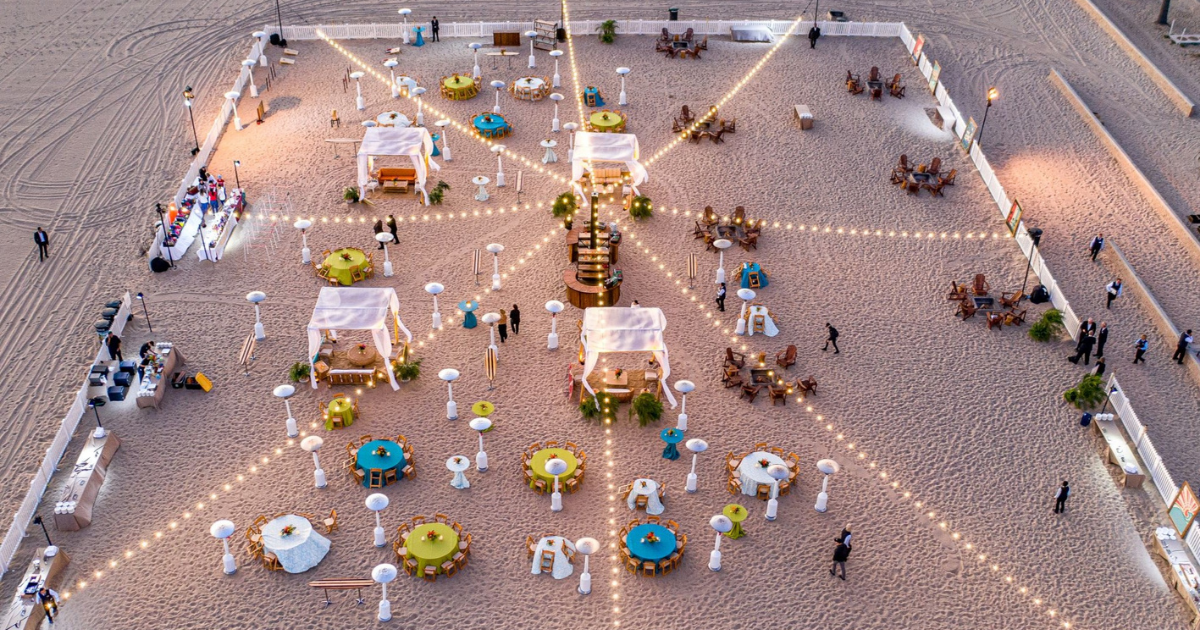
A client says “beach event,” and everyone pictures the same scene: lounge furniture facing the water, dinner under string lights, cocktails at sunset, and guests wondering why every corporate event cannot happen barefoot.
It’s a great picture.
Just outside the frame, someone is figuring out generator placement, restroom trailers, alcohol fencing, vendor access, public beach traffic, waste removal, and whether the caterer can move a working kitchen across 200 yards of sand before the load-in window closes.
Beach events can feel relaxed to guests. Planning one is usually anything but.
That does not mean you should steer the event back into a ballroom. The beach needs the same operational discipline as a convention center, plus a few extra conversations about wind, sand, tides, public access, and municipal rules.
Our Orange County team has planned enough coastal events to know what works, what gets expensive fast, and what only looks easy because someone handled the hard parts early. Here is what planners should know before saying yes.
Start with what guests will never see

A beach is essentially an empty venue with an excellent view.
There may be no dependable power, private restrooms, prep kitchen, lighting, flooring, built-in security, weather protection, or convenient loading area. Before design enters the conversation, the team may need to create the basic event setup from scratch.
That can mean generators, power distribution, temporary lighting, restroom trailers, catering equipment, fencing, flooring, permits, transportation, security, trash removal, and accessible pathways.
It can be surprising how much of the budget goes toward infrastructure because none of it appears in the inspiration photos. Still, those line items decide whether guests are comfortable and whether vendors can actually do their jobs.
Put together an infrastructure estimate early, before the full budget gets assigned to furniture, florals, and décor. Nobody wants to explain later that the woven cabanas have to go because the event also requires electricity.
Choose the date for the full experience
Weather matters, but seasonality involves much more than temperature and rain.
Peak summer dates can bring restrictions, crowded beaches, heavier traffic, youth programs, lifeguard operations, and limited event availability. Some California beaches do not permit private events during the summer. Others may allow them, but permission does not automatically make the date a smart choice.
Picture attendees arriving while families pack up umbrellas, junior lifeguards run drills nearby, and vendors try to load equipment through vacation traffic. The event may be allowed. The guest experience may still be less than ideal.
Time of day deserves the same scrutiny. Afternoon wind, sunset timing, temperature changes, tides, public activity, and hard event stops can all affect the schedule. A 6 p.m. dinner may require vendors to begin setup much earlier than expected, while a strict load-out deadline could mean additional labor after the event.
Review the entire day, not just the hours printed on the invitation.
Find out what the permit actually allows

Beach rules can vary by city, county, state, and managing authority. Before envisioning fire pits, live music, cocktails, tents, or dancing on the sand, confirm what the location allows and what it requires in return.
Questions should cover alcohol service, perimeter fencing, security staffing, sound limits, amplified entertainment, tents, open flames, cooking equipment, generator placement, restrooms, waste removal, vehicle access, accessibility, and setup and teardown hours.
Public restrooms deserve their own conversation. They usually remain open to the public and may not provide the privacy, cleanliness, capacity, or accessibility expected at a corporate event. An executive restroom trailer often gives guests a much better experience, but that will come at an additional cost that will need to be budgeted for.
Permits can also take time. So start those conversations before the creative plan becomes a promise.
Hire vendors who know the sand

A vendor can be excellent in a ballroom and still struggle on the beach.
Beach events involve long carries, uneven surfaces, restricted vehicle access, narrow setup windows, and more labor than many traditional venues. Experienced partners account for those conditions in their proposals instead of adding surprise costs three weeks before arrival.
It’s important to ask whether they have worked at that exact location or at least on a similar beach. Find out where trucks can park, how equipment will reach the site, whether temporary walkways or ramps are needed, and how many crew members are included for setup and strike.
Entertainment partners need the same review. Musicians may require staging, power, weather protection, lighting, or extra care for instruments. Interactive activities could need permits, anchoring, storage, or added staffing.
Good beach vendors are direct about what they need. That is far better than discovering at sunset that someone assumed a power source would be nearby.
Give catering a separate logistics plan
A caterer who regularly works in hotels may not have the equipment or staffing needed for an offsite beach event.
There may be no refrigeration, running water, sinks, prep counters, ovens, lighting, or secure storage. Every piece of kitchen equipment has to arrive with the team, operate safely, and fit within the approved footprint.
Review the proposal line by line. Confirm that labor, rentals, power, sanitation, transportation, kitchen lighting, service stations, and waste handling are included. When the menu changes, revisit the equipment list too. Switching from passed appetizers to a live cooking station can change power needs, staffing, permits, and setup space.
Service style matters as well. Choose food that will hold up in coastal conditions, and consider the distance between the kitchen and guest areas. A long walk through sand changes the pace of service more than most people expect.
Make the arrival easy on people
Transportation planning starts with access.
Where will guests get dropped off? How far will they walk? What will that route feel like in event attire? Who may need mobility assistance?
Sand, slopes, stairs, darkness, and distance can turn a scenic entrance into a difficult one. Those details need to be reviewed from a guest’s point of view, not just marked on a map.
Vendor access requires a separate plan. Confirm loading zones, parking areas, permit requirements, arrival order, and staging locations. When several trucks arrive at once with nowhere to wait, the site becomes congested before guests are anywhere near it.
A detailed site plan helps everyone work from the same information. Mark guest entrances, accessible routes, vendor paths, kitchen areas, generators, restrooms, security points, emergency access, and transportation zones.
Make sustainable choices that still feel considered
Many beaches require compostable, recyclable, or reusable service products. Those requirements support the destination, but planners should still look closely at how each option performs.
Ask the caterer to show a few choices at different price points. A lower-cost product may meet the rules, while a sturdier option may be a better fit for a plated meal or a higher-touch reception. In these instances, it’s best to consider what matters most.
Signage can also explain why certain materials were selected, especially at bars and food stations. Guests tend to respond well when they understand the reason behind the choice.
Service products are only part of the sustainability plan. Waste sorting, water stations, reusable décor, local sourcing, cleanup procedures, and vendor transportation all deserve attention.
Plan for the day you did not expect
Every beach event needs a weather backup, even when the forecast looks perfect and someone insists that it never rains there.
Wind can cause as many problems as rain. Temperatures may drop quickly after sunset. Tides can reduce usable space. A marine layer can hide the view, and coastal conditions can change faster than the production schedule.
Create backup plans for food service, entertainment, power, guest comfort, and transportation. Decide who will make the weather call and how far in advance that decision has to happen.
Our Orange County team relies on detailed checklists, repeated vendor reviews, and separate touchpoint calls with vendors and production partners. Our experienced operations leads also review the location and challenge any assumptions before event day.
For Huntington Beach events, Huntington City Beach remains a strong option for groups that want a true event on the sand. Young’s Beach Shack in South Orange County offers another approach, with some event infrastructure already in place. Cohera also plans programs around coastal resorts, private properties, and waterfront venues for events that require ocean access without building quite as much from the ground up.
Let the guests think it was easy
A well-run beach party should not feel weighed down by logistics. Guests should notice the ocean, the food, the conversation, and the details that make the setting comfortable.
They should never need to think about the permits, power calculations, vendor schedules, restroom plans, or backup options that made the evening work.
That sense of ease comes from experience, local knowledge, and a team willing to ask the unglamorous questions early.
Still deciding where to put your toes in the sand? The right shoreline depends on much more than the view. Our guide to the best beaches for corporate events looks at coastal destinations that pair strong scenery with the access, infrastructure, and flexibility planners need.
Browse our blog

Meet Trina Roffino
Read more
New CEO. New chapter. Lots to be excited about.

What to do in Nashville: A group guide for planners
Read more
Nashville has no shortage of ways to turn a group trip into a good time. Discover the hotels, venues, restaurants, and experiences worth adding to your Nashville agenda.
Breaking the general session mold
Read more
General session design doesn't have to feel predictable. See how experiential touches turn the main stage into a moment guests remember.
Ready for your one-of-a-kind experience?
Your inbox is starving. Feed it something good.
Sign up for our newsletter